When Do Embroidered Hoodies Work Better Than Print?
When Do Embroidered Hoodies Work Better Than Print?
Choosing between embroidery and print can significantly change the look, feel and perceived value of a hoodie. Both decoration methods have their strengths, but they are suited to different designs, fabrics and brand identities.
For clothing brands, the decision is not simply about which technique looks better. You also need to consider the artwork, garment weight, placement, quantity, customer expectations and overall product positioning.
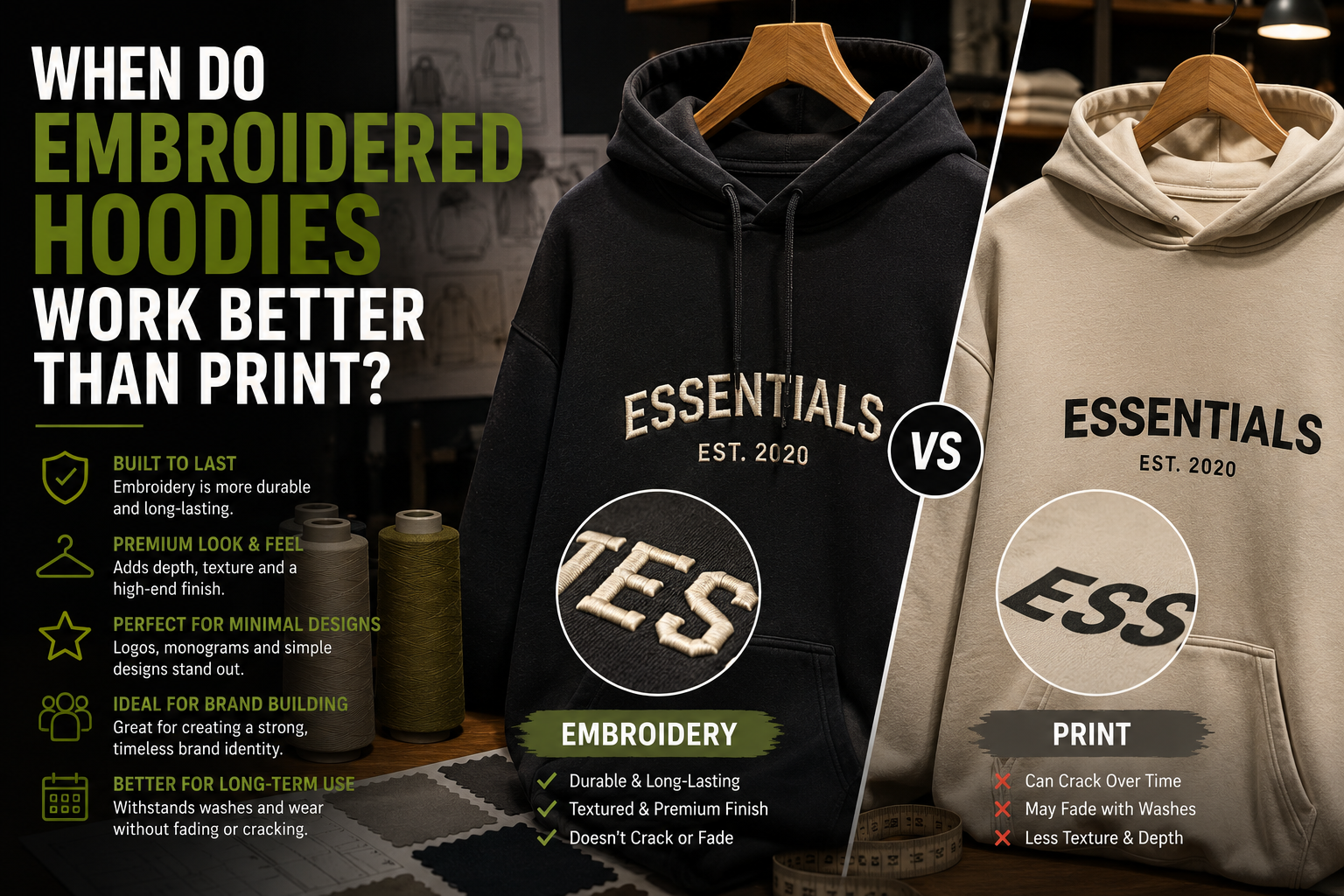
So, when do embroidered hoodies work better than printed hoodies? In many cases, embroidery is the better choice when you want a premium, textured and durable finish that becomes part of the garment rather than sitting on top of it.
What Makes Embroidered Hoodies Different From Print?
Embroidery uses thread stitched directly into the garment to create a logo, text or design. Print, on the other hand, applies ink or another printable material to the surface of the fabric.
This creates an important visual difference.
A printed graphic can reproduce colours, gradients, photographs and detailed artwork relatively easily. Embroidery creates a physical texture with visible stitching and depth.
For simple logos, initials and typography, this texture can give a hoodie a more premium appearance.
When Does Embroidered Hoodies Work Better?
1. For Premium and Minimalist Designs
Embroidered hoodies is particularly effective when the design is simple.
A small chest logo, brand name or monogram can look much more refined when stitched rather than printed. This works especially well for brands that want a minimalist aesthetic.
Instead of covering a large area with artwork, a small embroidered detail can create a subtle branding element.
For premium streetwear, fashion labels and corporate apparel, this understated approach can make the garment feel more considered.
2. For Small Chest Logos
One of the most common applications is a small logo on the left or centre chest.
A simple embroidered logo can add texture without overwhelming the garment.
This is especially useful when the hoodie itself is already heavyweight or has a strong silhouette. A small embroidered mark can complement the garment instead of competing with it.
For example, a heavyweight black hoodie with a tonal embroidered logo can create a clean, premium look.
3. When Durability Is Important
Embroidery can be a strong option when you want the branding to remain visually distinctive through regular use.
Because the design is created with thread, it doesn’t have the same type of surface-film behaviour associated with some printed applications.
However, durability still depends on thread quality, stitch density, garment construction, washing and production quality.
For clothing brands building long-term products, testing the finished garment before bulk production is always recommended.
4. For Heavyweight Hoodies
Heavyweight fabrics can provide a good foundation for embroidery because they offer more structure.
A 400 GSM, 460 GSM or heavier hoodie can carry a substantial embroidered logo without the garment feeling visually unbalanced.
That doesn’t mean embroidery is only suitable for heavyweight products. It can also be used on lighter garments, but the fabric construction needs to be considered carefully.
Very dense embroidery on a lightweight fabric can affect the garment’s drape and may create unwanted puckering.
When Is Print Better Than Embroidery?
Embroidery isn’t automatically the better option.
Print is usually more suitable when the artwork is large, highly detailed or contains many colours.
For example, a large back graphic with detailed illustrations would generally be more practical as a printed design.
Print can also be preferable for:
- Large artwork
- Photographic designs
- Gradients
- Fine details
- Complex illustrations
- Large text compositions
- Designs requiring many colours
Screen printing, DTG and DTF can each provide different results depending on the artwork and garment.
If your design is primarily visual artwork rather than a simple logo, printing will often provide greater flexibility.
Embroidered vs Print: Which Looks More Premium?
There isn’t a universal answer.
The perceived quality depends on the garment, artwork and execution.
A poorly digitised embroidery design can look untidy, while a professionally printed graphic can look extremely premium.
Likewise, a simple embroidered logo on a well-made heavyweight hoodie can look more luxurious than a basic printed logo.
For premium clothing, the combination of garment quality and decoration quality matters more than the technique alone.
Embroidered Hoodies Works Well for Brand Logos
If you’re developing a clothing brand, embroidery can be particularly effective for your main logo.
A simple wordmark or symbol can be embroidered onto the chest, sleeve or hood.
This gives brands another way to create a recognisable signature across different products.
You can also use tonal embroidery, where the thread closely matches the garment colour. This creates a subtle texture rather than a highly contrasting logo.
For minimalist brands, tonal embroidery can be especially effective.
Placement Matters
The same embroidery can look completely different depending on where it is placed.
Popular locations include:
- Left chest
- Centre chest
- Sleeve
- Hood
- Lower front
- Back neck
- Pocket area
For smaller logos, the chest is usually one of the safest options.
Sleeve embroidery can create a more distinctive look, while larger back embroidery can become a major design feature.
Before production, brands should review the actual size and placement on a sample rather than relying only on a digital mock-up.
What About Embroidery on Oversized Hoodies?
Oversized hoodies are popular in contemporary streetwear, and embroidery can work particularly well with this silhouette.
Because the garment has more visual volume, a small logo may provide just enough branding without making the design feel crowded.
However, oversized doesn’t automatically mean the embroidery should be oversized too.
In many cases, keeping the embroidered artwork relatively small creates a stronger premium aesthetic.
How Much Does Embroidery Cost?
The cost depends on factors such as:
- Stitch count
- Design size
- Number of colours
- Artwork complexity
- Garment type
- Order quantity
A simple small logo requires considerably less stitching than a large detailed design.
This means brands should consider stitch count when preparing artwork for production.
Reducing unnecessary detail can sometimes improve the appearance while also making production more efficient.
Can You Combine Embroidery and Print?
Yes. Combining both techniques can create an interesting premium effect.
For example, a hoodie could have a large printed back graphic with a small embroidered chest logo.
Another option is to use embroidery as an additional detail over or alongside printed artwork.
This gives brands more flexibility when developing a collection and allows different decoration methods to serve different parts of the design.
How Hamim Wear Can Help
At Hamim Wear, we work with clothing brands developing custom apparel and can help determine whether embroidery, printing or a combination of both is appropriate for a particular garment.
The decision can be based on the fabric, GSM, artwork, placement, desired finish and overall product positioning.
For brands developing heavyweight hoodies, oversized streetwear or premium garments, sampling the decoration on the actual fabric is an important step before moving into bulk production.
Frequently Asked Questions
Is embroidered hoodies better than printing on hoodies?
It depends on the design. Embroidery is often better for simple logos, typography and premium branding, while print is generally more suitable for large, detailed or colourful artwork.
Is embroidery good for heavyweight hoodies?
Yes. Heavyweight fabrics can provide a structured base for embroidered designs. However, stitch density and artwork size should be tested to ensure the garment maintains its intended fit and appearance.
Does embroidered branding last longer than print?
Embroidery can provide excellent durability because the design is created with thread, but longevity depends on the embroidery quality, garment and care. Proper production and washing are still important.
Is embroidery more expensive than printing?
It can be, particularly for large or complex designs with high stitch counts. A small, simple embroidered logo may be relatively efficient, while large embroidery can require significantly more production time.
Final Thoughts
The choice between embroidery and print should start with the design and garment, not simply the decoration method.
Choose embroidery when you want a textured, premium finish for logos, typography and minimalist branding. Choose print when you need large graphics, complex artwork, gradients or extensive colour reproduction.
For many clothing brands, the best solution can actually be a combination of both.
If you’re developing a new hoodie collection, testing the decoration method on the actual garment before bulk production can help you achieve the finish, fit and quality your brand expects.