
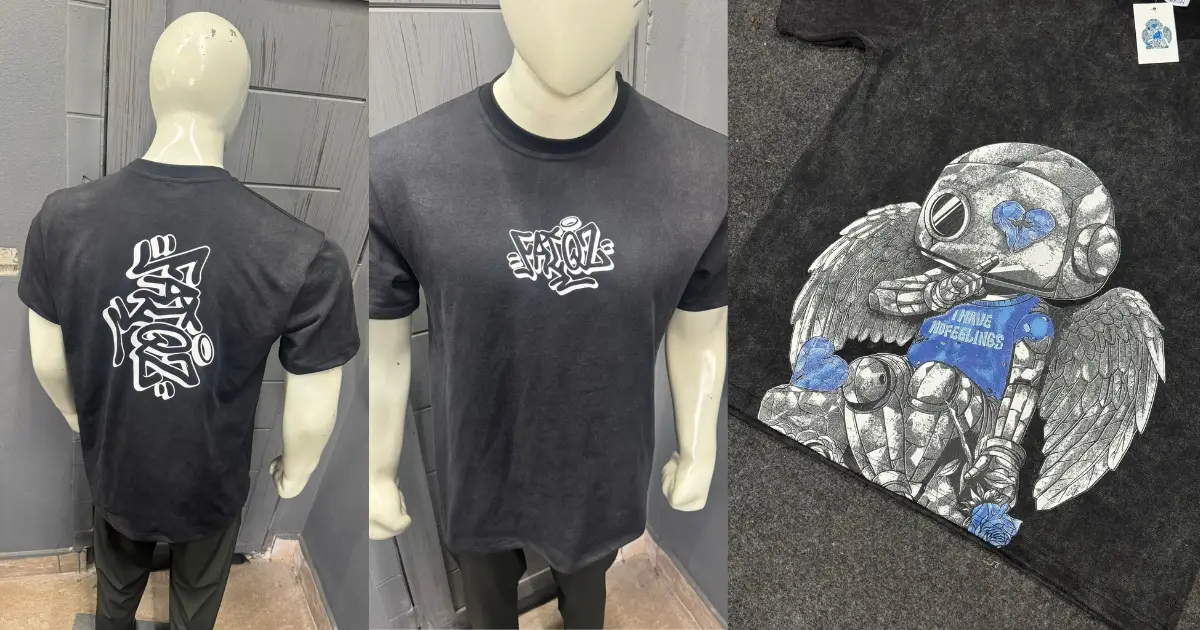
7 Reasons Custom Tees Screen Printing Never Goes Out of Style
Custom Tees Screen Printing: 5 Secrets Behind Shirts That Last
Custom tees screen printing has a story behind almost every shirt you’ve ever loved wearing. Not the marketing story the actual, physical one. Ink pressed into fiber, one color at a time, on a machine that hasn’t changed much in fifty years.
Here’s how that process really works, why it still beats flashier alternatives, and what separates a print that fades after three washes from one that outlives the shirt itself.
Where Custom Tees Screen Printing Actually Began
Picture a small event committee ordering shirts for a weekend fundraiser. Someone’s cousin knows “a guy with a machine in his garage.” The design is one color, the budget is tight, and the deadline is Friday.
That garage setup a wooden frame, a mesh screen, a squeegee, and a lot of patience is close to how custom tees screen printing has worked since the technique became commercial in the mid-20th century. A stencil blocks ink everywhere except where the design should sit, and the squeegee forces ink through the mesh onto the fabric below.
It sounds almost too simple. That simplicity is exactly why it’s lasted this long.
What Custom Tees Screen Printing Actually Involves
Every finished shirt goes through the same basic sequence, whether it’s made in a garage or a full production facility:
- Design separation the artwork is split into individual colors, since screen printing lays down one solid color per screen.
- Screen creation a mesh screen is coated and exposed so ink only passes through the design area.
- Press setup the garment is loaded and aligned under the screen, color by color.
- Printing ink is pulled across the screen with a squeegee, transferring the design onto the fabric.
- Curing the print is passed through a heat tunnel or press to bond the ink permanently into the fibers.
Skip or rush any one of these steps, and you get the classic problems: cracking ink, faded logos, or a print that peels after a handful of washes.
Why Custom Tees Screen Printing Still Beats Newer Methods
Digital and direct-to-garment (DTG) printing have gotten good genuinely good, for small runs and photo-realistic designs. But for solid colors, bold logos, and anything printed in bulk, screen printing usually still wins on two fronts: cost per unit drops sharply as quantity goes up, and the ink sits more solidly in the fabric than most digital methods, which shows up as better wash durability over time.
That trade-off is why screen printing remains the default for team merch, event shirts, and brand launches, even in a world full of print-on-demand options.
The 5 Secrets Behind Prints That Actually Last
1. Ink type matters more than most people realize. Plastisol ink sits on top of the fabric and holds color extremely well. Water-based ink soaks into the fibers for a softer feel but needs more careful curing. Neither is “better” they’re suited to different fabrics and finishes.
2. Fabric prep is half the job. Lint, moisture, or uneven fabric tension can ruin an otherwise perfect print before the ink even touches the shirt.
3. Mesh count changes the outcome. A finer mesh captures more detail; a coarser mesh lays down more ink for bold, solid colors. Using the wrong count for the design is a common rookie mistake.
4. Curing temperature is non-negotiable. Under-cured ink looks fine on day one and cracks within a month. Proper curing is what actually makes custom tees screen printing durable, not just good-looking in photos.
5. Registration accuracy separates amateurs from professionals. Multi-color designs need every screen aligned precisely. Even a millimeter of drift creates a blurry, unprofessional finish.
When Custom Tees Screen Printing Isn’t the Right Fit
It’s worth saying plainly: screen printing isn’t always the answer. Extremely small orders, gradient-heavy photos, or designs with dozens of colors are usually better suited to digital printing, where there’s no per-color screen cost to worry about. Choosing the right method for the design in front of you matters more than defaulting to whichever one sounds more “premium.”
From Story to Shirt: Where Hamim Wear Fits In
This is the process start to finish that sits behind every screen-printed order we run at Hamim Wear. We handle custom tees screen printing as part of our full production process in Sialkot, Pakistan: sourcing the right fabric weight, prepping it properly, and curing every print the way this guide describes, so the shirt your customer buys still looks right after the twentieth wash, not just the first.
If you’ve read this far because you’re actually planning a print run for a brand, a team, or an event we’re happy to talk through what your design needs. You can browse more on our blog, including our breakdown of t-shirt manufacturing FAQs, or head straight to our contact page to reach the team directly.
FAQs About Custom Tees Screen Printing
How long does custom tees screen printing last? A properly cured screen print on the right fabric can last 50+ washes without significant fading, whereas an under-cured print may start cracking within a few weeks.
Is screen printing cheaper than DTG for custom tees? For bulk orders with simple designs, yes — screen printing’s cost per unit drops significantly at scale. For small orders or highly detailed designs, DTG is often more cost-effective.
What’s the minimum order for custom tees screen printing? This varies by printer, but screen printing generally becomes cost-effective starting around 24–50 pieces per design, since each additional color requires its own screen setup.
Can screen printing be done on dark fabrics? Yes, using an underbase layer typically white ink printed first so the design colors show accurately on top of a dark garment.
Is screen printing eco-friendly? It can be, depending on the ink used. Water-based and eco-friendly inks reduce environmental impact compared to traditional plastisol, and some are certified under standards like OEKO-TEX, which tests for harmful substances in textiles.
Ready to Talk Through Your Print Run?
Whatever stage your idea is at, we’re happy to help you figure out the right approach for your custom tees screen printing project. Reach the Hamim Wear team through our contact page, or book a free consultation to walk through fabric, print method, and timeline together.
